
Key takeaways
- Price range: Commercial spiral mixers cost $2,500-$45,000+ in Australia (2026 AUD) depending on bowl capacity, motor power and build quality.
- Sizing rule: Dough capacity is typically around 40-60% of bowl volume depending on dough hydration and mixer design - a 60L bowl handles 24-36 kg of dough per batch, not 60 kg.
- Motor power threshold: Operations running more than 6 batches per day typically require a motor in the ~1.5 kW range or higher depending on dough type, hydration and batch size to avoid overheating and premature gearbox wear.
- Fixed vs removable bowl: Fixed bowls generally cost less than removable bowl models, often by around 15-30% depending on brand and configuration and suit single-product operations; removable bowls add flexibility for multi-dough bakeries running 3+ dough types per shift.
- Two-speed minimum: Two-speed operation (slow mix + fast knead) is the minimum for bread and pizza dough - single-speed models are limited to basic mixing only.
- Compliance: Must meet AS/NZS 60335-2-14 (commercial food mixer safety), AS/NZS 4024 (machinery guarding) and FSANZ Standard 3.2.3 (food contact materials).
- Both fixed and removable bowl spiral mixers are available from verified Australian suppliers on HospitalityHub.
Why Australian bakeries are switching to spiral mixers in 2026
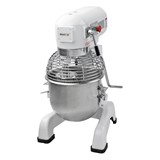
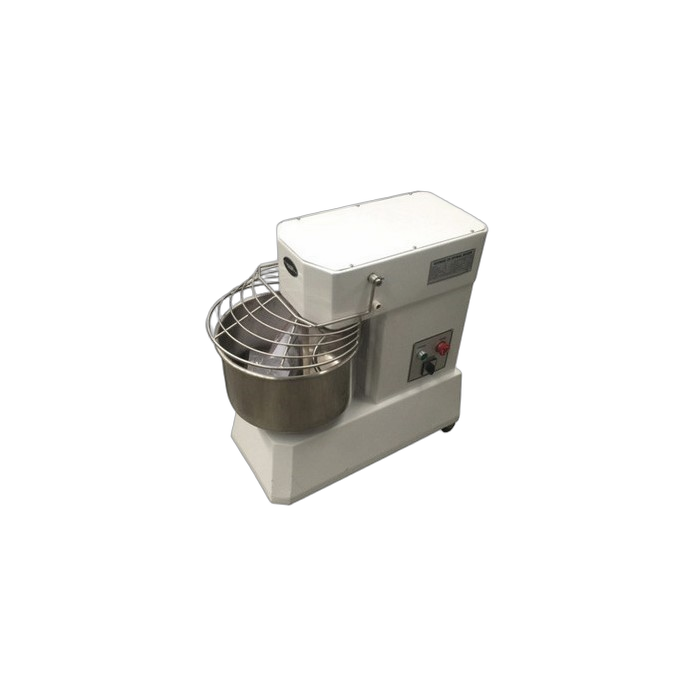
A spiral mixer uses a fixed spiral-shaped hook and rotating bowl to develop gluten structure with less friction heat than a planetary mixer. For Australian bakeries and pizza operations running more than 4 batches per day, the switch from planetary to spiral typically cuts mix times by up to 30-50% and produces more consistent dough hydration. Labour pressure across NSW and VIC hospitality sectors is accelerating this shift - a spiral mixer running 80 kg batches replaces 2-3 hours of hand-scaling and planetary mixing per shift depending on workflow.
This guide walks procurement managers and bakery owners through configuration, specifications, pricing and supplier evaluation for commercial spiral mixers in Australia. If you already know your configuration, get quotes for commercial spiral mixers to compare pricing from verified Australian suppliers. For operations still deciding between spiral and planetary, our planetary mixer buying guide covers the alternative.
Operations where spiral mixers are the standard choice:
- Artisan and wholesale bakeries producing bread, sourdough and pastry dough at scale
- Pizza production lines and high-volume pizzerias running 50+ kg of dough per shift
- In-store bakery departments in supermarkets and large food retailers
- Catering and institutional kitchens (aged care, hospitals, school canteens) with daily bread programs
- Food manufacturers producing pre-made dough for wholesale distribution
Choose your configuration
Before costing anything, confirm which configuration suits your production line. Your choice here sets your price bracket and most of the specs that follow.
Type | Bowl Size | Best For |
|---|---|---|
Fixed bowl, 2-speed |
20-80L |
Single-product bakeries and pizzerias with consistent batch sizes |
Removable bowl, 2-speed |
40-200L |
Multi-product operations needing fast bowl changeovers between dough types |
Removable bowl, variable speed |
80-300L+ |
High-volume wholesale and food manufacturing with precise speed control |
Fixed bowl suits you if you run one or two dough types per shift and do not need to pre-prepare bowls offline. Fixed models are simpler mechanically, cheaper to maintain and take up less floor space.
Removable bowl suits you if your operation runs 3+ dough types per shift or if batch staging is part of your workflow - fill one bowl while the mixer runs another. Removable bowl models cost more upfront but save up to 10-20 minutes per changeover compared to cleaning a fixed bowl between products.
Evaluate the key specifications
With your configuration confirmed, these are the specs that determine whether a given model fits your production line.
Specification | Typical Range | Buyer Consideration |
|---|---|---|
Bowl capacity |
20-300L |
Dough capacity is 40-60% of bowl volume - always size on dough weight, not litres |
Motor power |
0.75-7.5 kW |
Under-powered motors overheat on stiff doughs - match to dough hydration and batch frequency |
Speed settings |
2-speed or variable |
Two-speed handles most bread and pizza dough; variable speed adds control for enriched doughs |
Timer |
Manual or digital |
Digital timers with auto-stop reduce operator dependency and over-mixing risk |
Bowl material |
Stainless steel (304 or 316) |
Grade 316 required for high-acid doughs or heavy washdown environments |
Power supply |
15A single phase or 3-phase |
Models above 60L generally require 3-phase - confirm your site supply before ordering |
Understand the full cost breakdown (2026 prices)
Purchase price is only part of the picture - most cost models that get rejected at approval stage have missed the running cost layer. Here is the full breakdown.
Category | Price Range (AUD) | Typical Configuration |
|---|---|---|
Entry-level new (fixed bowl, 20-40L) |
$2,500-$6,000 |
2-speed, single-phase, manual timer |
Mid-range new (fixed/removable, 60-120L) |
$8,000-$22,000 |
2-speed, 3-phase, digital timer, bowl guard |
High-spec new (removable, 120-300L+) |
$22,000-$45,000+ |
Variable speed, 3-phase, programmable controls, multiple bowls |
Used/refurbished |
$1,500-$15,000 |
Condition-dependent - inspect spiral hook wear, gearbox noise and bowl fit |
Annual maintenance |
$400-$1,500/year |
Belt/chain tensioning, gearbox oil, bearing inspection, bowl seal replacement |
Five-year TCO on a mid-range 80L fixed-bowl model typically sits around $11,000-$28,000 depending on usage and maintenance including purchase, installation, maintenance and one spiral hook replacement. Electricity cost is modest at 1.5-3.5 kW draw - approximately $300-$800 per year at standard Australian commercial tariffs depending on batch frequency. For a mid-range unit at $8,000-$22,000, get quotes for commercial spiral mixers to compare pricing from verified Australian suppliers.
Plan the asset (depreciation and financing)
The ATO effective life for commercial kitchen mixing equipment is 10 years. Under diminishing value, the depreciation rate is 20%; prime cost is 10% per annum. The instant asset write-off threshold for 2025-26 is $20,000 - most entry and mid-range spiral mixers fall within this.
Quality spiral mixers from established European and Australian-distributed brands retain 20-30% of purchase price at 8-10 years on a well-maintained unit. Hire-to-own and operating lease arrangements are common for models above $10,000, particularly for new bakery fitouts where capital is allocated across multiple equipment lines.
Evaluate suppliers
You are ready to go to market. Use this checklist to assess each supplier against the same criteria.
Factor | What to Ask |
|---|---|
Dough capacity |
What is the maximum dough weight (not bowl volume) this model handles per batch? |
Motor duty cycle |
Is this motor rated for continuous duty at my planned batch frequency? |
Speed control |
Is it 2-speed mechanical or variable frequency drive? What is the RPM range for each setting? |
Bowl changeover |
How long does a bowl change take? Is a trolley or lifter included or an add-on? |
Warranty |
What is covered - motor, gearbox, electrical, bowl? What is the warranty period? |
Spare parts |
Are spiral hooks, belts and seals stocked in Australia or imported on order? |
Lead time |
What is the current lead time for this model? Is it ex-stock Australia or imported to order? |
Installation |
Is installation and commissioning included? Does it require a licensed electrician for 3-phase connection? |
Service network |
Do you have service technicians in my state? What is the typical response time for breakdown calls? |
Trade-in or buyback |
Do you offer trade-in on existing mixers or a buyback arrangement at end of life? |
Frequently asked questions
How much does a commercial spiral mixer cost in Australia?
Entry-level 20-40L fixed bowl models start from $2,500-$6,000, mid-range 60-120L units run $8,000-$22,000, and high-capacity removable bowl models above 120L cost $22,000-$45,000+ (2026 AUD). Used units in serviceable condition start from $1,500.
When should i choose a spiral mixer over a planetary mixer?
A spiral mixer is the better choice when your primary output is bread, pizza or heavy dough and you run more than 4 batches per day. Planetary mixers suit operations that need whipping, creaming and light mixing alongside occasional dough work - see the planetary mixer cost guide for a direct price comparison.
What is the expected lifespan of a commercial spiral mixer?
A well-maintained spiral mixer from an established brand lasts up to 10-15 years in a commercial bakery environment. The spiral hook and drive belt are the primary wear items, typically replaced every 3-5 years depending on batch volume.
Does a spiral mixer require 3-phase power?
Most models above 60L bowl capacity require 3-phase power supply. Smaller benchtop units (20-40L) typically run on standard 15A single-phase, but confirm with your supplier and electrician before ordering.
What compliance standards apply to spiral mixers in Australian commercial kitchens?
Spiral mixers must comply with AS/NZS 60335-2-14 (commercial food mixer electrical safety), AS/NZS 4024 (machinery guarding including bowl guards and emergency stops) and FSANZ Standard 3.2.3 for food-contact materials. Electrical installation must meet AS/NZS 3000 wiring rules.
Summary
- Size on dough capacity (40-60% of bowl volume), not bowl litres
- Fixed bowl for single-product lines; removable bowl for multi-dough operations
- Budget $2,500-$45,000+ depending on capacity and configuration (2026 AUD)
- Confirm 3-phase power availability before ordering any model above 60L
- Check spare parts availability in Australia - imported-to-order parts add weeks to downtime
- Two-speed operation is the minimum for bread and pizza dough production
Don't waste time contacting suppliers individually. HospitalityHub gives you direct access to verified Australian commercial spiral mixer suppliers - where hospitality buyers request and compare multiple quotes so they can buy with confidence.
- Get quotes for commercial spiral mixers - contact multiple verified suppliers with a single enquiry
- Compare models - filter by bowl capacity, configuration and region
- Contact suppliers directly - speak to specialists who service your state
→ Get and compare commercial spiral mixer quotes now → https://www.hospitalityhub.com.au/buy/commercial-spiral-mixer